Why is potassium permanganate (PP) still used to fade denim, and why is it time to move on? It is fast, cheap and easy to apply, and that convenience has hidden a serious cost to workers and to water. At Quest Performance Additives, we believe finishing chemistry should protect people and the planet without giving up performance. This is why we developed QuestCare Q9, a natural clay-based alternative to potassium permanganate.
Key takeaways
- Japan’s official GHS classification lists PP as an oxidising solid that is very toxic to aquatic life with long-lasting effects, and as causing severe skin burns and serious eye damage (NITE, PubChem).
- A 2024 Clean Clothes Campaign Turkey report covering 44 brands says workers applying PP face skin problems, blurred vision, respiratory issues and chest tightness, and estimates that over five tons of PP are used worldwide every day (source).
- In February 2026, PP was included in the ZDHC Chemical Watchlist, a voluntary reference list (ZDHC, Textalks).
- QuestCare Q9 delivers up to 45% lower COD and 38% lower BOD, eliminates absorbable organic halides (AOX), and protects denim strength.
Why did denim finishing turn to potassium permanganate?
To create worn, bleached-look jeans, finishers must remove indigo from selected areas of the fabric. For years this was done by sandblasting, a practice that caused silicosis among garment workers. Turkey banned manual sandblasting in April 2009 after a long campaign (Fair Trade Center report via Clean Clothes Campaign). IndustriALL reported that 550 former sandblasting workers in Turkey had been diagnosed with silicosis since 2005 and 46 had died of it.
PP spraying filled the gap. According to Labour Behind the Label, it is now used in around 90% of the processes that create the bleached look in denim. The lesson from sandblasting is clear: a shortcut that looks inexpensive can carry a heavy human and environmental cost. So, is PP any different?
What does potassium permanganate do to workers’ health?
PP is a strong oxidiser, and in denim units it is typically brushed or sprayed on by hand. The 2024 Clean Clothes Campaign Turkey report states that workers consequently face skin problems, blurred vision, respiratory issues, chest tightness and lung inflammation, and that long-term exposure can seriously damage the liver and kidneys. It also notes that PP is classified as hazardous by the European Chemicals Agency, while Turkey has no legislation limiting its use.
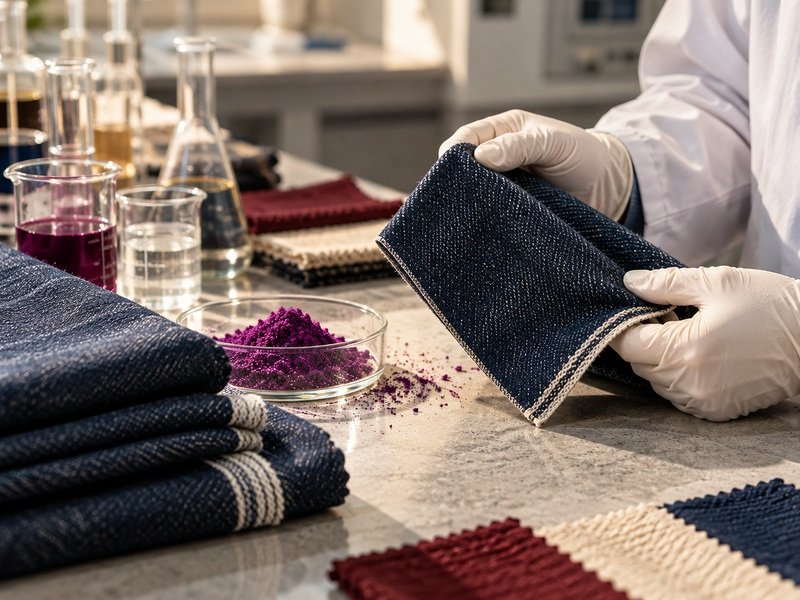
An earlier 2019 study by Clean Clothes Campaign Turkey, based on interviews at eight factories, reported skin and respiratory problems among spray workers, who were often given only ineffective dust masks (Labour Behind the Label).
Japan’s government GHS classification lists PP as an oxidising solid (H272), harmful if swallowed (H302), causing severe skin burns and serious eye damage (H314, H318), suspected of causing genetic defects (H341) and of damaging fertility or the unborn child (H361), and causing damage to the respiratory system and nervous system through repeated exposure (H372). See the NITE GHS classification and the PubChem record. Classifications vary by framework and supplier, so always check the entry that applies to your market.
How does it affect water and the environment?
The Clean Clothes Campaign Turkey report warns that the manganese in PP is a heavy metal that does not biodegrade and can damage the DNA of aquatic organisms. It estimates that bleaching 100 kg of textile material with PP produces around 500 litres of wastewater. Its case study, the Ergene Basin in Turkey, is described as unsuitable for agriculture and nicknamed the “dead river” (source). Japan’s GHS classification likewise rates PP as very toxic to aquatic life with long-lasting effects (H400, H410).
PP also sits inside a much bigger problem. A United Nations University policy brief cites the European Parliament in stating that the textile industry is responsible for nearly 20% of global water pollution. That is why discharge loads, measured as chemical oxygen demand (COD) and biological oxygen demand (BOD), matter so much. The cleaner the chemistry going into a wash line, the lower the burden on treatment plants and on rivers downstream.
Is the industry already moving away from it?
Yes. In February 2026, the Zero Discharge of Hazardous Chemicals (ZDHC) Foundation published its Chemical Watchlist V1.0, a provisional reference list of 1,624 substances relevant to textiles, leather, apparel and footwear. ZDHC describes it as voluntary and says it adds no new requirements of its own, but trade press reports that potassium permanganate is on the list (Textalks, FashionUnited). The same coverage notes that ZDHC already urges suppliers to evaluate alternatives to manual permanganate spraying and to use engineering controls, such as extraction and water curtains, where it is still in use.
The 2024 Clean Clothes Campaign report adds that the ZDHC MRSL does not entirely prohibit PP but strongly recommends occupational health and safety measures. It also notes that even brands committed to the MRSL admit using PP while they explore alternatives. Finishing-technology company Jeanologia has called for an accelerated phase-out of PP spray (Textile World); as a vendor of competing technology it has a commercial interest, so read it alongside the independent sources above.
For exporters, the direction of travel matters more than any single date. Buyers increasingly ask for documented chemical management, safer working conditions and cleaner effluent. Mills that move early are better placed for audits and for the next round of brand requirements.
What should you look for in a potassium permanganate alternative?
Controllable indigo discharge and uniform contrast, without weakening the fabric.
A formulation that does not rely on a hazardous oxidiser.
Measurably lower COD and BOD, and no absorbable organic halides (AOX).
Easy dilution and compatibility with your existing garment finishing line.
Credible third-party certification, such as ZDHC MRSL conformance, ToX FMD screening and Jeanologia’s EIM.
What is QuestCare Q9, and how does it replace potassium permanganate?
QuestCare Q9 is our natural clay-based garment finishing product, developed as an alternative to potassium permanganate and conventional chemical oxidisers. At its heart is responsibly sourced natural clay, chosen for its unique mineral properties. It interacts gently with denim fibres to deliver contrast and blasting effects without compromising fabric strength.
Green chemistry, designed by nature and perfected by science.
Why do mills choose Q9?
Integrates seamlessly into existing garment finishing processes.
Works synergistically with catalysts and boosters for consistent, reliable results.
Precise decolourisation and uniform contrast, with denim strength intact.
A natural formulation that enhances safety on the wash floor.
How much cleaner is the effluent?
| Parameter | QuestCare Q9 vs conventional PP process |
|---|---|
| Chemical oxygen demand (COD) | Up to 45% lower |
| Biological oxygen demand (BOD) | 38% lower |
| Absorbable organic halides (AOX) | Eliminated |
| Overall | Cleaner effluent, lower pollution, reduced energy use and less waste |
Results depend on process conditions. Ask us for technical data for your wash recipe.
See Q9 in action
Is it certified?
Yes. QuestCare Q9 is certified under ZDHC MRSL Level 3, screened by ToX FMD Services, and validated through Environmental Impact Measurement (EIM) by Jeanologia. Through our collaboration in Bangladesh with Pure Chemicals, Q9 is enabling responsible denim manufacturing across key global markets.

Why does Quest care so much about this?
Quest Performance Additives is a pioneer in sustainable textile chemistry. Since 2017, we have worked with 35+ channel partners and a 7,000+ ton annual capacity to deliver bio-based chemistry for textiles that performs. Our conviction is simple: if a process can be made safer for people and gentler on water, it should be. That belief runs through our enzymatic innovation range, our full concepts portfolio and our sustainability commitments, including ZDHC alignment, biodegradable chemistry, and reduced water and energy use. Learn more about Quest and our garment processing solutions.
Ready to leave potassium permanganate behind?
Talk to our technical team about replacing PP in your denim process. We will help you plan a trial.
Request technical data or a trial
Prefer to talk first? Visit our Contact Us page.
Frequently asked questions
Why is potassium permanganate being replaced in denim finishing?
Because of worker health concerns from spray application, its classification as an oxidiser that is very toxic to aquatic life, and growing pressure from brands, NGOs and bodies such as ZDHC to adopt safer alternatives.
Is potassium permanganate banned?
Not universally. It was included in the ZDHC Chemical Watchlist in 2026, which is voluntary, and some brands have introduced their own restrictions on PP spraying. Check the requirements of your buyers and local regulators.
What is a natural alternative to potassium permanganate for denim?
QuestCare Q9, a natural clay-based product from Quest Performance Additives, is designed as an alternative to potassium permanganate for garment finishing and denim fading.
Does QuestCare Q9 affect denim strength?
No. Q9 delivers precise decolourisation and uniform contrast without compromising denim strength.
How can I trial QuestCare Q9?
Share your wash recipe and process details with our technical team through the enquiry form, and we will arrange technical data or a trial.
Sources
- Clean Clothes Campaign: Bleaching chemicals used on jeans have devastating effects on workers and environment (2024)
- Labour Behind the Label: Concerns raised over health impacts of chemical use in denim bleaching (2019)
- NITE (Japan): GHS classification of potassium permanganate
- PubChem: Potassium permanganate (CID 516875)
- ZDHC Foundation: Chemicals Watch List
- Textalks: ZDHC’s new chemical watchlist puts potassium permanganate back in the spotlight
- FashionUnited: ZDHC expands MRSL with chemical watchlist
- Textile World: Jeanologia urges industry to accelerate PP spray phase-out
- Fair Trade Center / Clean Clothes Campaign: Fashion Victims, a report on sandblasted denim
- IndustriALL: Sandblasting, the human cost of fashion
- United Nations University: Textile wastewater policy brief (2025)
- ZDHC Foundation
